

0 引言
长江作为中华民族的母亲河,在我国经济社会发展中占据核心地位,同时也是国家生态安全屏障的重要组成部分。近年来,随着工业化和城镇化的加速推进,长江流域面临污染物排放增加、生物多样性下降和生态功能退化等多重环境问题[1],越来越多的学者针对长江流域水生态系统健康开展研究。与发达国家相比,我国的水生态监测与评价起步较晚[2],早期主要依据国家相关法律法规的要求与管理者的关注点,采用基于物理、化学指标的水质监测方法[3]。随着研究和管理需求的不断提升,生物指标逐渐被引入评价体系,通过多参数综合评估水体生态健康程度[4]。至今,我国已初步形成了具备中国特色的水生态监测与健康评价体系[5-6],从物理生境、理化指标、水生生物等多个维度,开展水生态健康评价。在长江流域积极推进水生态环境质量监测工作中积累了大量数据,通过对水生生物的系统监测与分析,深入开展水生态健康评价,为长江流域的生态保护与修复提供了重要支撑 。
文献计量分析作为结合数学与统计学的定量研究手段,可为某一科学领域的发展状况提供宏观画像,而知识图谱则是文献计量分析可视化的具体表现形式,能够得出该领域的演进脉络与研究热点,并探测研究前沿[7-8]。鉴于此,本文以Web of Science 核心合集(Web of Science Core Collection, WoSCC)和中国知识基础设施工程(又称中国知网,China National Knowledge Infrastructure,CNKI)为数据来源,借助VOSviewer与CiteSpace文献计量软件,对长江流域水生态健康评价领域的研究文献进行分析,系统梳理近年研究的发展趋势、前沿热点、知识聚类及演进脉络,并评述研究进展与主要内容,将为我国长江流域未来的水生态环境研究和保护提供借鉴与参考。
1 数据来源与研究方法
1.1 数据来源
本文主要结合英文文献和中文文献数据对长江流域水生态健康评价研究现状进行分析,选取WoSCC及CNKI数据库。对于英文数据,在WoSCC中以“water ecological health”“ecological integrity evaluation”“river ecosystem health”等作为研究内容主题词,以“Yangtze River”“Hanjiang River”“Three Gorges Reservoir”“Poyang Lake”等作为研究区域主题词,研究内容和研究区域组内部各主题词使用“OR”运算符连接,研究内容和研究区域组间使用“AND”运算符组合形成最终检索式。对于中文数据,在CNKI数据库中以“水生态健康”“生态完整性评价”“河流生态健康”等作为研究内容主题词,以“长江”“汉江”“三峡”“鄱阳湖”等作为研究区域主题词,研究内容和研究区域组内部各主题词使用“+”运算符连接,研究内容和研究区域组间使用“AND”运算符组合形成最终检索式。分别对上述检索式进行高级检索,时间跨度选择2000年1月1日—2024年12月31日,在WoSCC数据库中获得864篇文献,在CNKI数据库中获得551篇文献。经过数据清洗,剔除图书、会议和序言等文献后,最终在WoSCC数据库中得到561篇文献,在CNKI数据库中得到364篇文献。
1.2 研究方法
2 研究结果与分析
2.1 研究发文量分析
文献检索得出国内外长江流域水生态健康评价研究的年度发文量如图1所示。
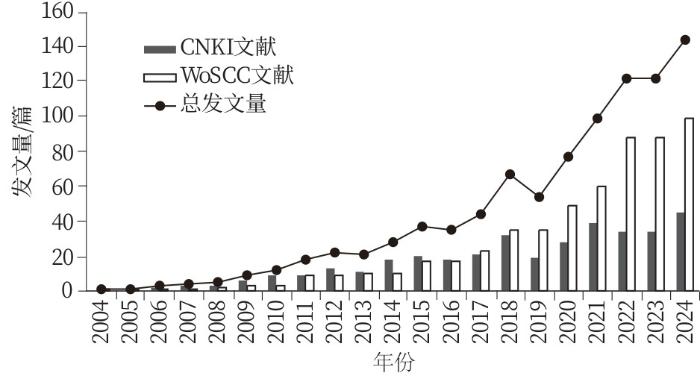
整体来看长江流域水生态健康评价文献的发表情况大致可以归纳为3个阶段:第1个阶段为2000—2009年,由于水生态研究刚刚起步,在该阶段研究人员对于长江流域水生态健康评价的关注度不高,年均发文量不足10篇,且以单一理化指标的断面监测为主。第2阶段为2010—2016年,这一阶段年发文量呈现逐渐增长的趋势,但整体发文量仍然不高,该阶段对我国的水生态健康评价研究工作发挥了一定的推动作用。第3阶段为2017—2024年,在该阶段,长江流域水生态健康评价研究步入快速发展期,以长江流域水生态健康评价为主题的研究不断增多,文献数量明显增加,年总发文量由2017年的44篇上升到2024年的144篇,达到了该领域的发文量高峰,并且研究内容开始多样化。另外,WoSCC发文量逐步超过CNKI发文量,可以看出近年来长江流域水生态健康评价研究逐渐成为国际上的热门领域。
图1所示发文量趋势与长江流域生态保护政策实施呈现显著耦合特征。20世纪90年代,全国水生生物监测体系初步建立[2],但长江流域研究仍以分散调查为主。2010年,水利部启动全国重要河湖健康评价试点工作[6],标志着长江水生态健康评价进入系统化探索阶段。2012年生态文明建设战略上升为国家战略后,政策与技术形成双重驱动,生态环境部联合水利部发布《重点流域水污染防治规划(2011—2015年)》,明确提出建立生物完整性评价标准体系,同期“十二五”水体污染控制与治理科技重大专项设立“流域水生态环境质量监测与评价”研究课题,研究内容从单一理化指标向生物群落结构分析发展[11]。2016年《长江经济带发展规划纲要》明确“共抓大保护”导向,研究尺度从单一河段向流域系统拓展,评价维度从传统生物指标向“社会-生态”耦合系统延伸[12]。2018年《长江保护修复攻坚战行动计划》与2020年“长江流域禁渔十年计划”形成叠加效应,鱼类资源评估和栖息地修复技术成为研究热点[13],长江流域水生态健康评价领域学术影响力不断增强。
2.2 研究热点分析
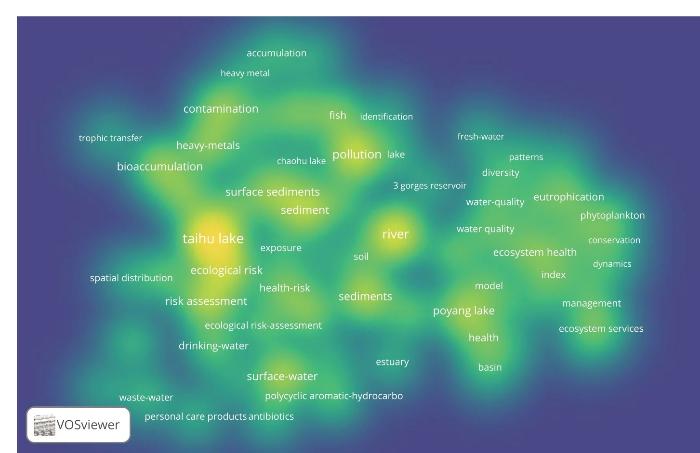
利用VOSviewer软件对WoSCC数据库中561篇论文的关键词进行分析,形成关键词共现矩阵密度图(图2)。长江流域水生态健康评价研究呈现显著的空间聚焦与问题导向特征。可以得出,主题词“taihu lake”(太湖)和“river”(河流)的权重最高,“pollution”(污染)、“sediment”(沉积物)、“ecological risk”(生态风险)、“risk assessment”(风险评估)等也是权重较高的高频词(出现频次>50次)。这说明水生态健康评价研究主要集中在长江干流及典型湖泊[14-15],研究多从污染物驱动的生态风险评估角度切入[16],剖析沉积物重金属污染对于水生态系统的影响[17-18]。
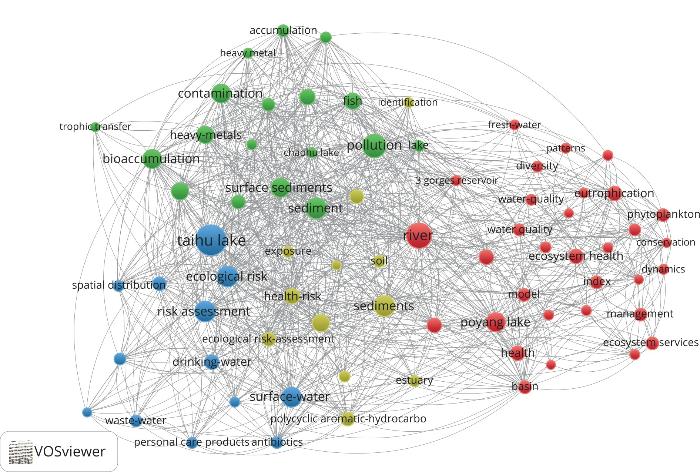
进一步挖掘WoSCC数据库中关于长江流域水生态健康评价研究领域热点,利用VOSviewer软件对关键词进行聚类分析,形成关键词聚类图谱(图3)。561篇文献的关键词被分为4个大类学科热点领域,分别为河流生态系统健康评估与调控(聚类1: river(河流))、湖泊重金属污染迁移与风险管控(聚类2: pollution(污染))、太湖新污染物生态风险与饮用水安全(聚类3: taihu lake(太湖))、沉积物有机污染溯源与综合风险评估(聚类4: sediment(沉积物))。
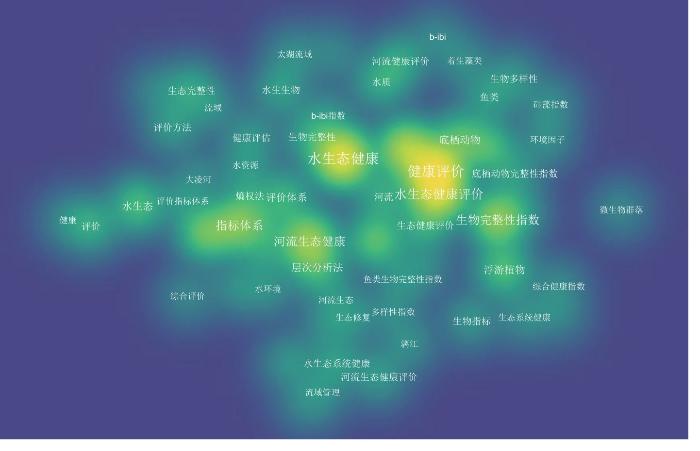
利用VOSviewer软件对CNKI数据库中364篇论文的关键词进行分析,形成关键词共现矩阵密度图(图4)。主题词“健康评价”和“水生态健康”的权重最高,“生物完整性指数”“大型底栖动物”“指标体系”“层次分析法”等也是权重较高的高频词(出现频次>20次),研究重点主要是通过多指标体系的整合与定量分析,系统评估长江流域水生态健康状况,为生态保护提供理论支撑。
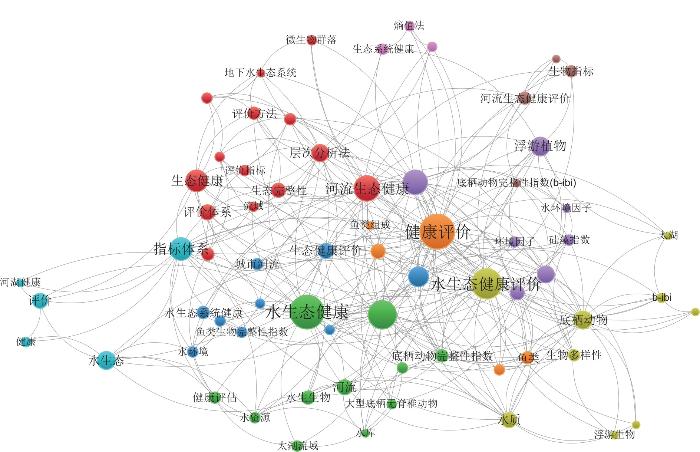
进一步挖掘CNKI数据库中长江流域水生态健康评价研究领域热点,利用VOSviewer软件对关键词进行聚类分析,形成关键词聚类图谱(图5)。364篇论文的关键词被分为9个类别,分别为河流生态健康、水生态健康、大型底栖动物、水生态健康评价、生物完整性指数、指标体系、健康评价、底栖动物完整性指数(Benthic Index of Biotic Integrity,B-IBI)、综合健康指数。为了更精确地分析研究主题,在软件聚类的基础上,将这9个类别凝练成3个大类,分别为河流生态健康多方法融合评价体系构建(聚类1: 河流生态健康)、水生态健康生物完整性诊断与修复策略(聚类2: 水生态健康评价)、多营养级生物完整性驱动机制与调控路径(聚类3: 健康评价)。


2.3 研究趋势分析
表1 2000—2024年WoSCC文献中该领域文献突现词Table 1 Burst keywords in WoSCC literature in this field (2000—2024) |
| 关键词 | 突现强度 | 开始年份 | 结束年份 |
|---|---|---|---|
| nitrogen | 2.66 | 2009 | 2010 |
| spatial distribution | 2.58 | 2016 | 2017 |
| personal care products | 4.44 | 2017 | 2019 |
| surface sediments | 2.66 | 2017 | 2019 |
| ecological risk assessment | 3.65 | 2018 | 2019 |
| three gorges reservoir | 2.74 | 2018 | 2020 |
| bioavailability | 2.73 | 2018 | 2019 |
| ecosystem services | 2.96 | 2020 | 2024 |
| heavy metal | 2.49 | 2020 | 2022 |
| quality | 2.49 | 2020 | 2022 |
| land use | 2.74 | 2021 | 2022 |
| trophic transfer | 2.87 | 2022 | 2024 |
表2 2000—2024年CNKI文献中该领域文献突现词Table 2 Burst keywords in CNKI literature in this field (2000—2024) |
| 关键词 | 突现强度 | 开始年份 | 结束年份 |
|---|---|---|---|
| 评价方法 | 1.92 | 2006 | 2009 |
| 生态健康 | 3.13 | 2008 | 2015 |
| 生物指标 | 1.86 | 2018 | 2019 |
| 太湖流域 | 1.80 | 2018 | 2021 |
| 底栖动物 | 3.40 | 2020 | 2024 |
| 群落结构 | 2.09 | 2020 | 2023 |
| 指标体系 | 1.94 | 2022 | 2024 |
| 鱼类 | 1.86 | 2023 | 2024 |
表2列出了CNKI数据库中该领域文献的突现词。早期(2006—2015年)以构建“生态健康”概念框架为核心(突现强度3.13),聚焦多学科交叉的“评价方法”体系开发(如层次分析法、模糊综合评价)[34],旨在破解生态系统复杂性量化表征的技术瓶颈,这与国家“十一五”期间生态保护政策驱动密切相关。中期(2018—2021年)研究转向区域精细化与生物响应机制解析,突出表现为“太湖流域”特异性问题(突现强度1.80)及“生物指标”(突现强度1.86)的应用深化[41],反映监测技术进步对生物完整性评价的支撑作用。近期(2020—2024年)研究前沿集中于“底栖动物”(突现强度3.40)、“鱼类”群落结构(突现强度1.86)等关键生物类群的多维度评价[46],通过“指标体系”动态优化(突现强度1.94)实现生态健康诊断从单一理化参数向“生物-环境-功能”耦合评价的范式升级[5-6],这与长江大保护战略对生态系统完整性维护的需求紧密相关。
3 研究结论与展望
3.1 研究结论
本文系统梳理长江流域水生态健康评价研究领域20余年的相关文献,探讨了长江流域水生态健康评价领域研究主题的发展脉络,分析了未来研究趋势,帮助读者全面了解长江流域水生态健康评价的研究历程及其演变,为长江流域未来的水生态健康评价和环境质量提升工作提供科学参考。主要结论如下:
(1)随着长江流域开发进程的不断推进,我国持续出台针对性政策举措,推动长江流域水生态健康评价相关研究向纵深发展。研究成果呈显著增长态势,为长江大保护战略提供了坚实的理论支撑和实践范例,有力推动了长江水生态系统保护工作的系统性开展。
(2)在长江流域水生态健康评价研究内容上,WoSCC研究以污染驱动的生态风险评估为核心,强调多介质界面过程解析与健康暴露模型构建;CNKI研究则侧重评价方法学创新及生物完整性阈值诊断。WoSCC研究注重微观机理,CNKI研究侧重宏观管理工具的开发,整体上形成了“机理-技术-政策”的互补关系。
(3)新时期战略目标下,长江流域水生态健康评价研究重点逐步拓展,当前更注重水生态系统的多维度综合评估,以实现流域水生态健康精准评价,有效支撑“十四五”期间河湖水体管理目标从“水环境质量评价”向“水生态系统健康评价”的根本性转变。
3.2 未来展望
针对长江流域水生态系统的复杂性,未来研究需着力深化多学科交叉融合,提升技术方法的科学性与适用性。进一步强化水生态监测能力建设,推进智能监测技术与多界面耦合模型相结合,发展多类群生物指标综合评价指标,完善水生态健康评价监测指标和标准体系。通过上述创新,逐步构建高效精准的长江流域水生态健康评估与风险管理技术体系,为长江大保护及全球大河治理提供坚实的科技支撑。