

0 引言
丹江口水库位于汉江中上游,水域横跨湖北、河南两省,水库总库容339.1亿m3,为我国第二大水库。丹江口水库也是国家南水北调中线工程水源地、国家一级水源保护区[1-3]。至2023年10月,丹江口水库已有92.19亿m3南水进京,惠泽京城[3-4]。丹江口水库地理位置的特殊性不言而喻,其流域水文与水生态环境状况倍受关注。水温是衡量水文特征和水生环境状况的关键参数,其在垂直方向上的变化对河流的生态平衡和水生生物的生命周期具有显著影响[5-7]。水温不仅影响水体的物化特性和生化速率,而且影响水生生物的生长发育和繁殖等活动。同时,水库水温分布受到气候条件、水文循环以及水库管理策略等多重因素的共同作用,这些因素在不同的时间和空间尺度上会导致水温分布呈现多样化的变化模式。
由于水库水温和水质对农田灌溉、工业供水、生活用水、下游河流的水质和生态平衡以及库区水利用等方面都有重要影响,诸多国家都非常重视水库的水温和水质研究工作。在20世纪30年代,英国和苏联针对水库的水温和水质进行了实地监测分析[8]。日本对于水库水温的研究始于第二次世界大战期间,在水库水温分层特性和水库分层取水方面取得了阶段性成果[9]。我国则是从20世纪50年代开始对水库进行水温观测;20世纪60年代—80年代开展水库水温特性分析研究,在水库水温估算方面取得了阶段性进展。自20世纪90年代起,随着国外先进模型的引入、消化和本土化创新,我国在水库水温模拟技术方面取得了持续进步。陈永灿等[10]、李钟顺等[11]通过对密云水库多种水面热量交换因素进行综合考量,得出湖泊型水库水温变化主要受季节变化和水深影响的结论。左新宇等[12]、程帅等[13]基于2016—2019年溪洛渡坝前断面连续多月的监测数据,分析了溪洛渡坝前水温的垂向分布变化特征及其成因。戴凌全等[14]采用现场监测和数值模拟的方法,探究了溪洛渡水库在不同来流条件下坝前水温的变化特征。谭升魁等[15]对热带地区水库水温分层特性进行研究,发现水库水温分层结构主要取决于季节变化。
丹江口水库水域面积广阔、水动力变化复杂,亟需研究库区水温时空分布规律。本研究旨在开展丹江口库区不同典型水文时期的水温观测,分析丹江口水库水温时空变化特征,揭示其水温变化特性及其影响因素,探讨水温垂向分布、水温变化特征及成因,以期为丹江口流域水文与水生态环境研究提供基础参考。
1 研究区域与方法
1.1 研究区域概况
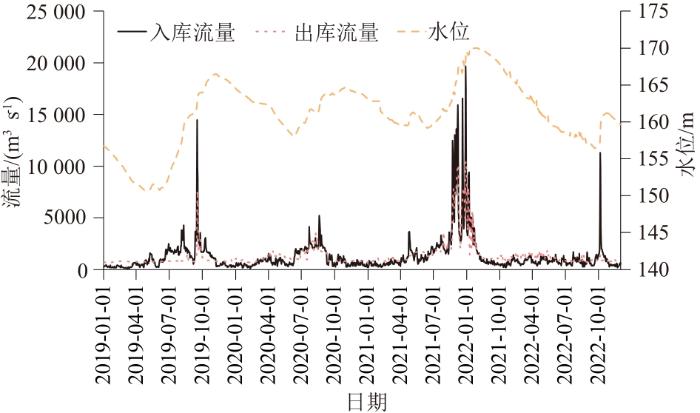
丹江口水库位于汉江中上游(属长江流域),多年平均入库流量为394.8亿 m3,水量主要来自于汉江和丹江。丹江口大坝加高以后,水库正常蓄水位由157 m增至170 m,库容由174.5亿 m3增至290.5亿 m3。丹江口水库地处北亚热带向暖温带过渡地带,属于典型的季风型大陆性半湿润气候,年平均降雨量800~1 000 mm,但由于水域面积广阔,丹库和汉库自然降水年内分布不均,主要集中在7—9月份,雨热同季。库区流域水系发达,河流众多,具有明显的季节性特征。图1为丹江口水库2019年1月1日—2022年11月30日入库流量、出库流量和水位的变化过程。由图1可以看出,在冬春季,水库长时间保持低流量、低水位运行,流量范围为0~3 000 m3/s;在夏季,雨水相对增多,水库水位、流量增大,流量范围一般为0~5 000 m3/s;秋季是丹江口水库的主汛期,这一时期水库水位将达到全年的最大值,流量范围为0~20 000 m3/s。受秋汛影响,丹江口水库于2023年10月12日水位蓄至170 m正常蓄水位,是丹江口水库大坝加高后继2021年以来第二次实现170 m满蓄目标。
1.2 数据与方法
1.2.1 数据采集
研究对2023年枯水期(2月份)、平水期(6月份)和汛期(9月份和10月份)4个典型特征时期开展全库水温原型观测。观测采用自容式温深仪(道万DW1413,青岛道万科技有限公司生产)测量不同断面的水温垂向分布,温度测量范围为-5~36 ℃,测量精度可达±0.002 ℃,仪器沿水深方向平稳下放至库底以保证数据的完整性。布置16个观测断面,断面分别覆盖丹库、汉库的上中下游及丹江口坝前区域,其中丹江口水库坝前设置1个断面(1#),汉江干流设置7个断面(5#—11#),丹江干流设置8个断面(2#—4#、12#—16#),断面位置及编号见图2。最长观测断面(15#)长度达10 km。根据水面宽度,沿断面方向等距布设5条垂线用于观测水温数据。不同时期观测工况如表1所示。
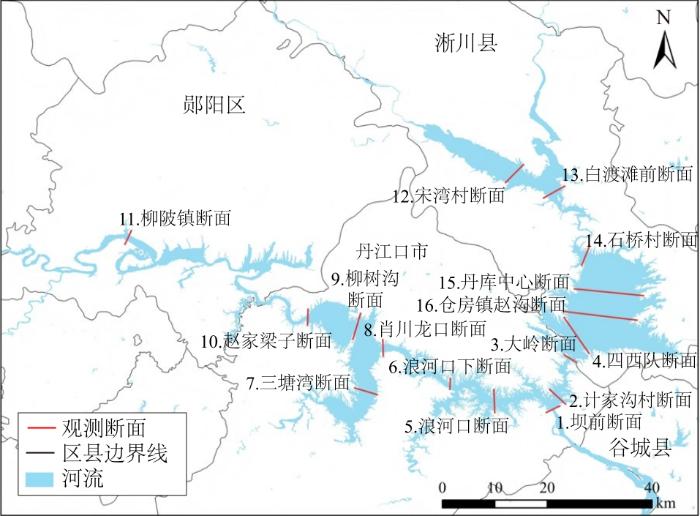
图2 丹江口水库水温观测断面分布Fig.2 Distribution of water temperature observation sections in Danjiangkou Reservoir |
表1 丹江口水库观测工况Table 1 Record of observation conditions in Danjiangkou Reservoir |
| 观测 次数 | 观测日期 | 库水位/m | 入库流量/ (m3·s-1) | 出库流量/ (m3·s-1) |
|---|---|---|---|---|
| 1 | 2月20日—27日 | 155.38~155.67 | 49~1 930 | 497~1 740 |
| 2 | 6月24日— 7月3日 | 161.33~161.60 | 1 260~3 100 | 1 370~1 910 |
| 3 | 9月20日—29日 | 165.48~167.15 | 3 650~8 080 | 896~6 290 |
| 4 | 10月8日—16日 | 169.11~170.00 | 1 340~4 680 | 783~3 860 |
1.2.2 水温结构判别方法
表2 水库水温类型判定阈值Table 2 Thresholds for classifying reservoir water temperature types |
| 水库类型 | α | Tr/d | R | Fr | 分层特征 |
|---|---|---|---|---|---|
| 分层型水库 | <10 | >100 | <30 | <0.1 | 稳定分层 |
| 过渡型水库 | [10,20] | [10,100] | <30 | [0.1,1.0] | 不稳定分层 |
| 混合性水库 | >20 | <10 | >30 | >1.0 | 一般不分层 |
(1)库水交换次数法的计算式为
式中:α为径流-库容比数;W为多年平均入库总流量(m3);V为水库总库容(m3)。
(2)水体滞留时间判别法的计算式为
式中:Tr为水体滞留时间(d);Qd为多年平均日径流量(m3/d)。
(3)水库宽深比判别法的计算式为
式中:R为水库宽深比;B为水库水面平均宽度(m);H为水库平均深度(m)。
(4)密度弗劳德数判别法的计算式为
式中:Fr为密度弗劳德数;L为水库长度(m);Qs为入库流量(m3/s);g为重力加速度(m/s2),取9.81;G为标准化垂向密度梯度(量级为10-3/m)
2 观测成果及分析
2.1 丹江口水库水温时间变化
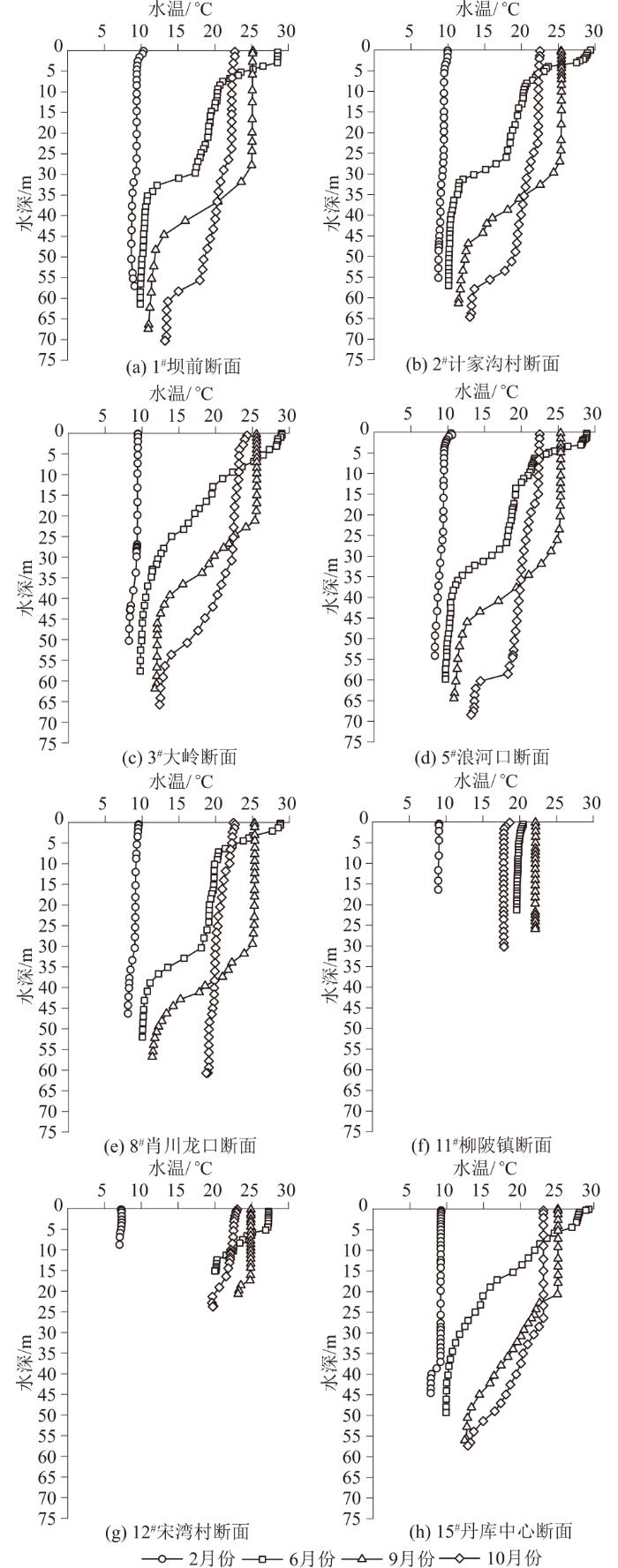
图3为丹江口库区8个典型断面不同时期水温垂向变化。由图3可以看出,丹江口两库垂向水温随季节变化显著,且仅有汉库库尾(11#)在4个时期垂向水温均未出现分层现象。坝前断面、库首(2#、5#、6#),汉库中游(7#、8#、9#)断面在不同水文时期水温变化趋势相似,枯水期(2月份)没有出现明显分层现象,平水期(6月份)和汛期(9月份)形成了稳定分层,且在平水期(6月份)出现双温跃层,其中表层温跃层位于水深0~10 m处,厚度为5~7 m,深层温跃层位于水下25~40 m处,厚度为10~15 m,但在汛期(10月份)汉库中游(7#、8#、9#)断面受洪水影响没有明显分层现象,其余4个断面则在水深55~60 m处温度骤降,出现明显分层现象。丹库中游(3#、4#、14#、15#、16#)、丹库库尾(12#、13#)共7个断面在不同水文时期水温变化趋势相似。枯水期(2月份)没有出现分层现象,平水期(6月份)各断面位于水深0~35 m处出现温跃层,汛期(9月份、10月份)则分别在水深20 m和26 m处至库底出现温跃层。汉库中游(10#)4个时期仅在平水期(6月份)出现水温分层现象,分层处位于水体表层,厚度为5~10 m。
2.2 丹江口水库水温空间变化
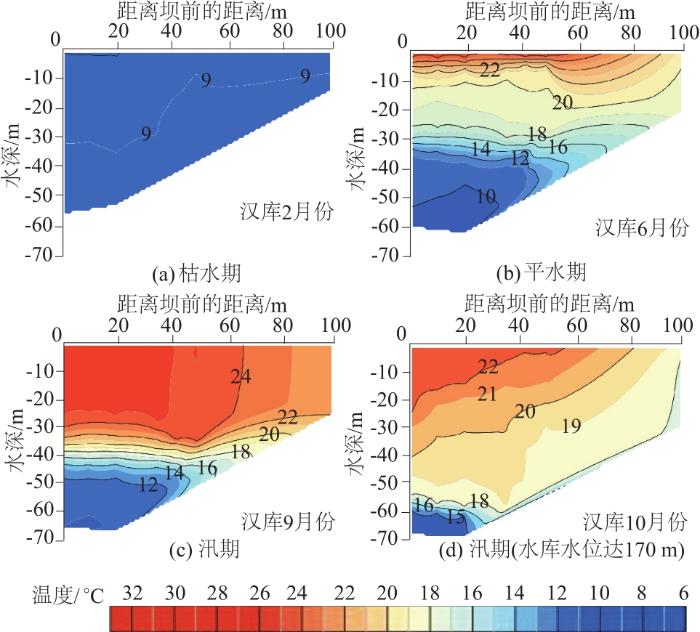
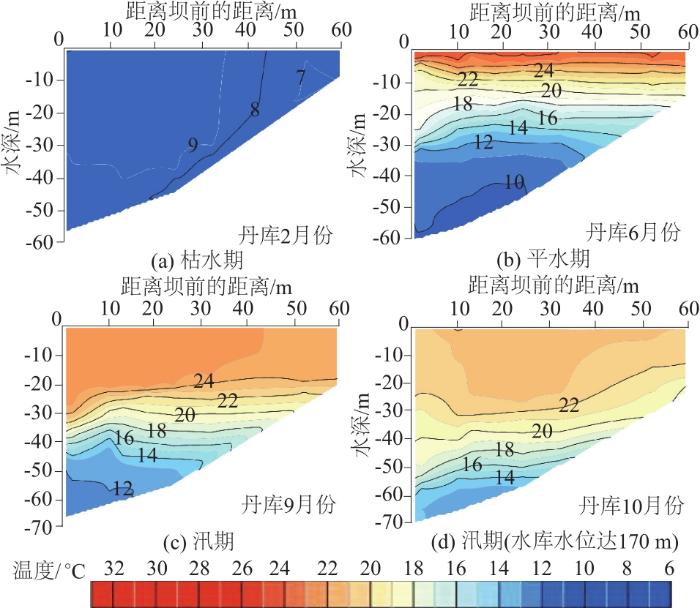
图4、图5分别为丹库和汉库不同时期垂向温度剖面分布。丹库和汉库水温时空特征明显且有一定地域性特征。库区4个时期水温变化范围为7~30 ℃。在2月份,全库水体掺混程度高,水温分层不明显,但丹库库底水温相对于汉库更低。在6月份,丹库和汉库水温分层有所增强,其中,汉库分别在0~10 m和30~35 m两处出现温跃层,垂向温度梯度最大分别为1.42 ℃/m和1.16 ℃/m,表底温差最大为18.85 ℃。在距坝前0~50 km范围内等温线相对较密,越向上游表层水温呈现出逐渐降低趋势。丹库则于水深0~35 m处有较为明显的温度变化,垂向温度梯度最大为0.53 ℃/m,最大表底温差为18.98 ℃。丹库从库首到库尾等温线相对平滑且在上层水体中分布相对均匀。汉库和丹库在坝前距库底25~35 m处出现等温线聚集现象。在9月份,丹库和汉库同样出现明显分层现象。汉库在水深30~50 m处出现温跃层,垂向温度梯度为0.5~0.7 ℃/m,最大表底温差为14 ℃,距坝前最远的库尾基本不发生明显水温分层现象。丹库在水深22~45 m处出现温跃层,垂向温度梯度最大为0.41 ℃/m。汉库和丹库在坝前距库底25~35 m处等温线出现聚集现象。在10月份,丹库和汉库水温分层现象相对减弱。汉库垂向温度梯度最大为0.24 ℃/m,最大表底温差为9.5 ℃,且越靠近上游温度越低,分层越弱,等温线整体呈向下倾斜趋势。丹库位于水深26~57 m处出现温跃层,垂向温度梯度最大为0.33 ℃/m,最大表底温差为10.25 ℃。表明丹库和汉库均为分层型水库,但两者分层形式又有所不同。
3 讨论
3.1 季节变化对水温分层影响
受季节规律影响,丹江口水库在沿水深方向上呈有规律的水温分层。冬季2月份,气温较低,水库水温不高,气温与水温极差较小,同时由图1可知,此时水库入库径流较小,长时间处于低水位、低流量状态运行,水库水体热交换能力弱,水体掺混程度高,掺混相对均匀,这一时期水体温度基本呈等温分布,因此全库水温在2月份未出现分层现象。由于夏季气温逐渐提高,太阳和大气辐射对水体表面的加热量也逐渐增加,水库表层水温受日气温变化影响较大,但由于水库水位相较于春季和冬季提高,入库流量增大,表层水体受太阳辐射影响急剧升温,深层水体由于其流速较低水温垂向混合作用较弱,且6—7月份属于丹江口水库的汛前期,上游来流增大,来流水温低于库区表层而高于水库底部,从而使整个水体处于水温的高度分层状态,在此时期内,表温层与滞温层水温相差达20 ℃左右,易形成双温跃层现象,这与王帅等[21]、华逢耀等[22]研究结论一致。除了双温跃层外,受外界风力的作用可能形成3个温跃层[23]。9—10月份,表层水温随着气温的逐渐降低,温跃层向下潜入库区,表底层温差减小,但上层水体受夏季长时间高温辐射,上层水体水温虽有所降低但趋于稳定,深水区水温受水库深度影响,但由于丹江口水库在9—10月份入库流量激增,水位达到全年最高点,水体之间热交换受洪水影响显著,由于上游来水温度较表层低,易在水体中层形成温跃层,此时水库整体分层最为稳定且温跃层厚度相对较大。
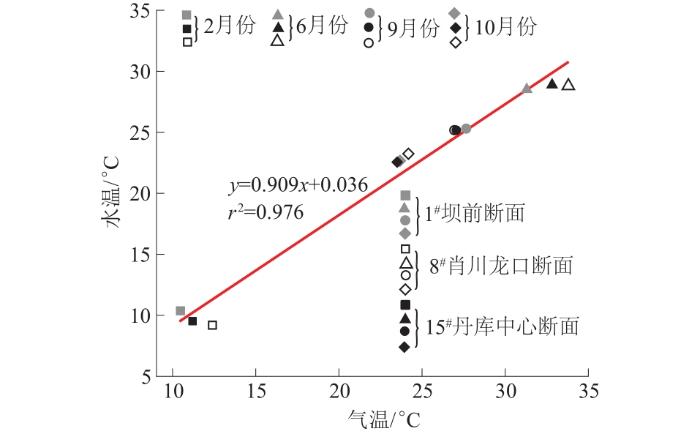
为进一步探究季节温度变化对于水温的影响,对不同时期坝前断面与两库中游断面的气温与表、中、底水温变化过程及趋势进行分析。以坝前断面为例,由图6发现其断面不同时期表层水温与平均气温均呈先上升后下降的趋势,平水期(6月份)表层水温与气温最大,变化倾向率基本相同,且同时期气温略高于水温;中层水温同样呈现先上升后下降的趋势,但受热量传递影响具有一定的滞后性,水温在汛期(9月份)达到最大值;底层水温受水深影响滞后性更为显著,整体呈现出逐渐升高的趋势,在汛期(10月份)水温达到最大值。图7为坝前断面与两库中游断面表层水温与平均气温的相关关系,其决定系数R2高达0.976,表明表层水温会随着季节气温的变化而变化。
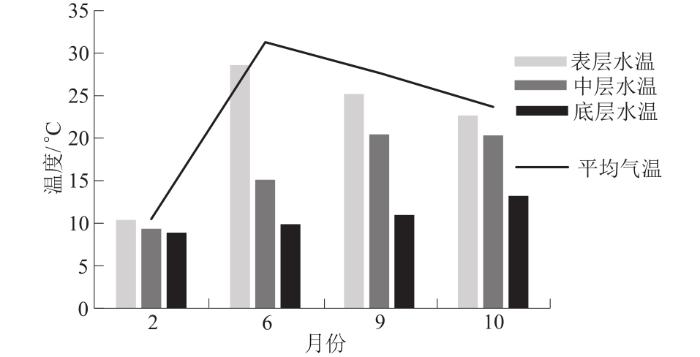
图6 坝前断面4个时期气温与表、中、底层水温关系Fig.6 Relationship between air temperature and surface, middle, and bottom water temperatures at dam-front section during four periods |


3.2 丹库与汉库水温分层差异性原因
汉库与丹库水温分层差异性与其所处地形的差异有关。丹库库区中心河道地形呈水面开阔,岸线较平直,库湾较少,底部平坦的特征,使其水动力学特征更倾向于静态水体,水体流动相对较弱,形状呈湖泊状。对于湖泊型水库而言,气象条件是影响湖泊型水库主温跃层形成的主要原因[24-26]。在日间,湖泊型水库因太阳辐射作用出现日温跃层现象;到了夜晚,随着气温下降,水库表层的水体开始冷却,水体在垂直方向上进行掺混,并在水库区域内反复发生,最终形成了主要的温跃层。丹库中心水体深度相对较大,水体流动性不强,水体滞留时间长达336 d,库水径流-库容比数α为1.084,水体长时间的稳定有助于热能的储存和缓慢释放。这使得水体在夏季吸收并储存大量的太阳辐射热,而在秋冬季则缓慢释放这些热能,从而起到调节周围环境温度的作用,从图3中15#丹库中心断面也可以看出,在汛期(9—10月份),水体所产生的温跃层更为稳定厚实,不会因为上游来流使水体底部产生滞温层,同时也使得丹库的水体滞留时间长于汉库。由于温跃层产生机制不同,对丹库而言,从图5可以看出,整个库区温跃层与等温线呈平行态。丹库其他的指标,水库宽深比R为32.78、密度弗劳德数Fr为0.000 46,其中除水库宽深比R略微超出分层型水库限制外,其余指标均在分层型水库判定阈值内。汉库河道地形呈现出库岸陡峭,库形狭长,库水中间深两边浅的特征,其水体具有显著的纵向梯度变化,水体流动性更强,为典型的河道型水库。与湖泊型水库不同,河道型水库的水力停留时间较短,因此昼夜温差对表面温跃层的深化作用并不显著,气象因素也不足以形成与湖泊型水库相似的季节性温跃层。河道型水库的主温跃层的形成主要受入流水温和水库形态的影响,同时在坝前区域,取水位置也是一个重要影响因素。河道型水库的主温跃层是由动力因素主导的[27-28]。因此,汉库中、上游(5#、6#、7#、8#、10#、11#)断面分层厚度与持续分层时间都相对较弱,同时受到9—10月份汛期的影响,水流从水体中部进入库区,水体温度低于表层高于底部,在水体中部产生温跃层,在此流态之下受深度影响生成滞温层。汉库为河道型水库,由动力条件产生的温跃层,从图4中可以看出其等温线和温跃层与流线相平行,呈倾斜状态,在取水口局部区域呈等温线收缩现象。这与贺玉彬等[29]在研究乌东德水库垂向水温变化产生机制时,得到的河道型水库等温线和温跃层呈倾斜状态、湖泊型等温线和温跃层呈水平状态结论一致。根据经验公式计算汉库对应的指标分别为库径流-库容比数α为1.417、水体滞留时间Tr长达257 d、水库宽深比R为15.48、密度弗劳德数Fr为0.000 96,均在分层型水库判定阈值内。通过原型观测所展现出的丹库和汉库垂向水温分层现象与表3中通过经验公式计算结果所判断的分层类型一致。
表3 水库水温垂向分层指标Table 3 Indicators of vertical thermal stratification in reservoir |
| 水库名称 | α | Tr | R | Fr | 类型 |
|---|---|---|---|---|---|
| 丹库 | 1.084 | 336 | 32.78 | 0.000 46 | 分层型水库 |
| 汉库 | 1.417 | 257 | 15.48 | 0.000 96 | 分层型水库 |
4 结论
在不同时期对丹江口库区进行全库16个典型断面的水温原型观测,分析丹江口水库垂向水温分层结构的时空变化特征和影响因素。主要结论如下:
(1)丹江口水库为稳定分层型水库,其垂向水温分布具有明显随季节变化特征,其中夏季和秋季为稳定分层期,春季和冬季为混合期。
(2)在秋季,丹江口水库垂向水温结构为单温跃层型,在夏季,由于气温升高和入库流量增强,水体的垂向混合作用得到加强,导致汉库垂向水温结构表现为双温跃层型;主温跃层厚度及深度随季节进行周期性变化,夏季厚度增加,秋末厚度减小,分层深度从夏季到秋季逐渐变深。
(3)丹库和汉库均为分层型水库,但丹库水流流动相对缓慢,库径流-库容比数α为1.084,略低于汉库的1.417,导致水体滞留时间为336 d长于汉库水体滞留时间,从而丹库水温垂向分层现象时间长于汉库。
(4)汉库为河道型水库,温跃层产生受水动力影响较大;丹库为湖泊型水库,温跃层产生受气象条件影响较大。由于产生机制的不同,两者的等温线及温跃层形态具有明显差异。