

0 引言
受到流域独特的地理位置和气候条件的影响,长江流域是我国干旱灾害的频发地之一,旱灾范围强度持续增加,已成为影响长江经济带高质量发展战略的一大风险[5]。2001年夏秋季严重干旱、2006年川渝特大干旱、2010—2011年冬春连旱、2013年夏季高温伏旱、2019年夏秋连旱均对流域社会经济发展造成了较大的干扰[6-10]。特别是2022年夏季以来,长江流域大部发生了自1961年以来最高强度的持续性高温过程,降水量较常年同期显著偏少,出现了极为少见的“汛期上中下游同枯”现象。旱情迅速发展与农作物生育关键期重合,城乡供水和农业灌溉受到了严重威胁。面对上述形势,水利部密切关注长江流域雨情、水情、旱情态势,滚动预测预报,指导旱区完善抗旱预案和水量调度方案,督促落实抗旱保供水措施。长江水利委员会先后组织开展了两轮抗旱保供水保秋粮丰收专项行动,累计补水61.6亿m3,切实保障了沿线城乡供水和农田灌溉需求,打赢了抗旱保供水攻坚战[11]。
2022年长江流域持续高温与特大干旱同期发生,其抗旱实践是流域级干旱应对的典型案例,仍然暴露着一些技术短板。一方面,主要采用了降水、气温等气象干旱监测指标,旱警水位告警预警功能没有充分发挥;另一方面,流域水库群水量应急调度方案快速生成和情景推演能力不足,抗旱调度预演预判水平有待提高。因此,充分运用数字孪生、大数据等新一代信息技术,构建流域抗旱补水调度平台系统,提升旱情监测预警和抗旱调度决策水平,已成为我国水利和应急管理部门亟待解决的瓶颈问题。
在水利部大力推进数字孪生流域、数字孪生工程和数字孪生水网建设的背景下[12],抗旱管理信息化建设取得了大量的研究成果。杨旭颖[13]基于“防汛+互联网”理念,研发了阜新市防汛抗旱指挥系统,提升了市级防汛抗旱指挥决策水平。杨帆等[14]基于“两台一库”技术架构,建设了云南省抗旱业务Web GIS系统,有效支撑了省域抗旱管理业务工作。李鹏飞等[15]基于Web GIS开发了长江流域干旱评估预报信息系统,实现水雨情观测、干旱评估、旱情预测及三维可视化等功能,为长江流域提供实时旱情预报信息。范光伟等[16]研发了珠江抗旱抑咸“四预”系统,提升了流域枯水期多目标调度决策水平。这些成果大多围绕抗旱管理业务标准化、旱情监测评估等展开,仍然没有完全解决旱情监测预警效率较低、抗旱调度推演能力不足等实际问题。此外,在数字孪生建设顶层设计中,流域防洪方面的技术要求比较清晰,干旱防御技术要求较为简略,一定程度上加大了抗旱减灾数字孪生建设的难度。其中,长江水利委员会已建成的“长江流域水利一张图系统”等均未包括抗旱管理功能模块。
面对上述情况,从抗旱“四预”业务需求出发,研发抗旱补水调度数字孪生平台,围绕“当前旱情诊断-未来趋势研判-抗旱调度推演-预案会商决策”全链条全过程开展情景推演,研究成果可为流域干旱防御数字孪生建设提供技术示范。
1 数字孪生平台研发
1.1 抗旱“四预”需求
基于数字孪生预报、预警、预演、预案“四预”要求,结合抗旱信息管理、抗旱应急响应、旱灾核查评估和抗旱效益评价、抗旱预案编制等业务需求,提出抗旱“四预”业务流程,如图1所示。
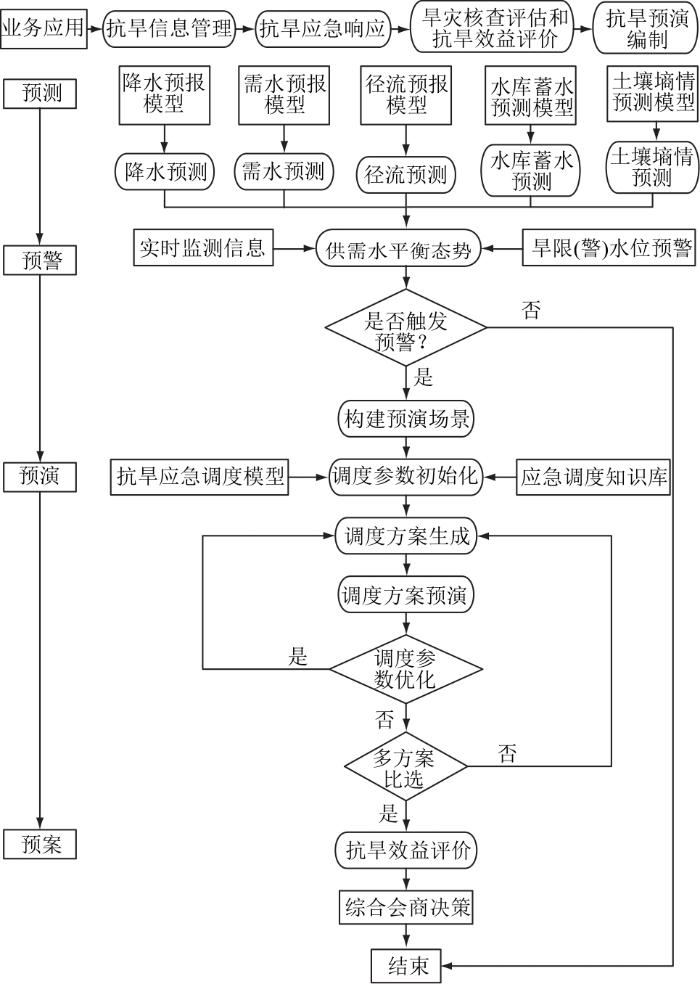
(1)预报。基于气象、水文、土壤墒情等数据资源,调用水利专业模型算法,对降水、需水、水库蓄水和土壤墒情等干旱要素进行预报预测。
(2)预警。基于实时监测数据和未来趋势预测成果,结合旱警水位预警指标,动态识别区域供需水平衡态势,适时发布干旱监测告警和预测预警。
(3)预演。基于抗旱调度知识库和应急调度模型成果,结合调度参数初始化和滚动优化,主动生成多个水库调度方案,通过多方案比对分析和综合展示,确定最优调度方案。
(4)预案。基于最优方案预演结果,通过调度会商形成旱情应对措施和抗旱调度建议,自动生成抗旱报告,支撑抗旱会商决策。
1.2 平台功能结构
针对上述业务需求,在数字孪生、大数据的支持下,调用数据底板中的降水、气温、湖泊水体、水库蓄水、土壤墒情等数据资源,构建了抗旱补水调度平台,实现了监测告警、预测预警、调度预演、预案会商和用户管理等功能[17]。
如图2所示,抗旱调度平台结构主要包括:
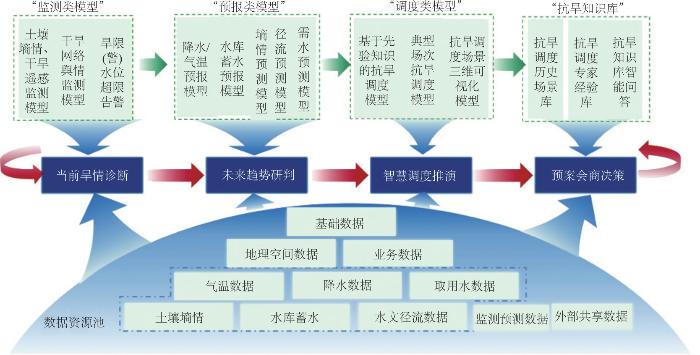
(1)数据底板,主要是汇聚了地理空间数据、监测预测数据、基础数据、业务数据和外部共享数据的数据资源池。其中,地理空间数据包括卫星遥感影像、河流水系、水库及抗旱工程等空间分布及属性数据。监测预测数据包括降水、水位、流量、土壤墒情等多类型监测数据和模型预测数据产品。监测数据来源于水利部防汛抗旱指挥系统,主要包括雨量站2 922个、气象站163个、水位站864个、土壤墒情站1 223个、河道水文站1 311个、水库站1 822个。基础数据包括历年农作物受旱受灾面积、耕地缺水缺墒面积、粮食因旱减产量等灾情数据、人口社会经济数据。业务数据包括旱情动态、抗旱调度方案、因旱减产、抗旱浇灌补水、抗旱挽回损失、旱警水位等统计资料。外部共享数据包括气象、应急、农业等行业抗旱数据,及互联网舆情数据。
(2)模型库,主要有监测类、预报类和调度类。其中,监测类包括水情雨情监测、土壤墒情监测、卫星遥感监测、网络舆情监测、监测水位超限告警等。预报类包括降水/气温预报、水库蓄水预报、土壤墒情预测、径流预测、需水预测、预测水位超限预警等。调度类包括基于先验知识的抗旱调度、典型场次抗旱调度、抗旱调度三维可视化等。
(3)知识库,主要有抗旱调度历史场景库、抗旱调度专家经验库、抗旱知识库智能应答。其中,抗旱调度历史场景库包括2013年、2019年、2022年等长江抗旱调度典型场景。抗旱调度专家经验库包括各级抗旱专家在识别干旱成因和危险程度、提出应急抢险方案和措施等方面形成的经验。抗旱知识库智能应答是基于大模型算法,通过语义理解和上下文感知,构建抗旱知识库,实现对于用户提出的干旱问题的解析、理解并智能解答,辅助支撑会商决策。
(4)业务应用,主要有旱情监测告警、干旱预报预警、抗旱调度预演和抗旱会商决策模块。其中,旱情监测告警通过供需水平衡计算,分析干旱影响区域旱灾等级强度,结合旱警水位超限预警方式触发实时旱情告警。干旱预报预警提前计算未来3、7、15 d等流域来水需水情况,结合供需水平衡态势分析,结合旱警水位超限预警方式触发干旱风险预警,展示未来旱情空间分布和严重程度特征。抗旱调度预演根据抗旱调度知识库和应急调度模型成果,构建抗旱调度方案知识库,通过调度参数初始化和滚动优化,生成多个水库调度方案,进行多方案比对分析和综合展示,确定最优调度方案。抗旱会商决策根据最优方案预演结果,结合流域、省级防汛抗旱应急预案,自动生成抗旱调度报告,实现抗旱知识库智能应答,支撑抗旱会商决策。
平台基于微服务架构研发,已实现的主要功能如图3所示。
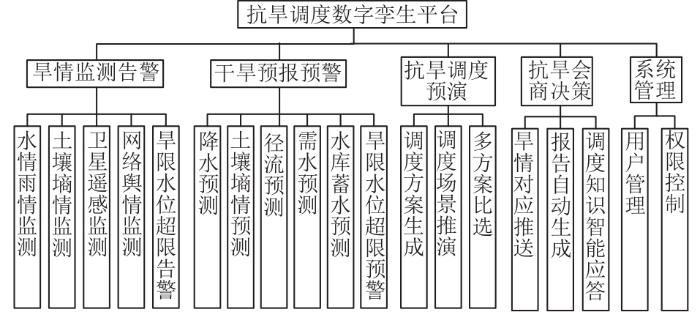
目前,平台已纳入2000—2024年长江流域历史旱灾、水库调度方案、抗旱应急预案等数据资料,实现了干旱网络舆情监测分析、旱警水位超限告警预警、抗旱调度方案知识库和场景匹配等关键技术,可供抗旱补水调度“四预”情景推演。
2 情景推演
抗旱调度情景推演围绕“当前旱情诊断-未来趋势研判-抗旱调度推演-预案会商决策”全业务链条展开。其中,“当前旱情诊断”关注干旱影响区域范围及旱情等级强度,解决“旱情在哪里”的问题;“未来趋势研判”关注于在当前旱情发展态势下,如果不进行人工干预,未来将会形成怎样的旱灾,解决“旱灾怎么变”的问题;“抗旱调度推演”关注于如何开展水库调度等人工干预来尽可能地缓解旱灾范围强度,解决“水库怎么调”的问题;“预案会商决策”关注于抗旱调度预案报告编制及抗旱知识应答等,解决“抗旱怎么办”的问题。
下面以长江流域2022年特大干旱为典型案例,开展了抗旱调度情景推演,初步实现了抗旱“四预”示范应用。
2.1 当前旱情诊断
通过旱情监测告警模块实现,包括旱情监测数据接入、监测数据超限告警和干旱网络舆情监测。
2.1.1 旱情监测数据接入
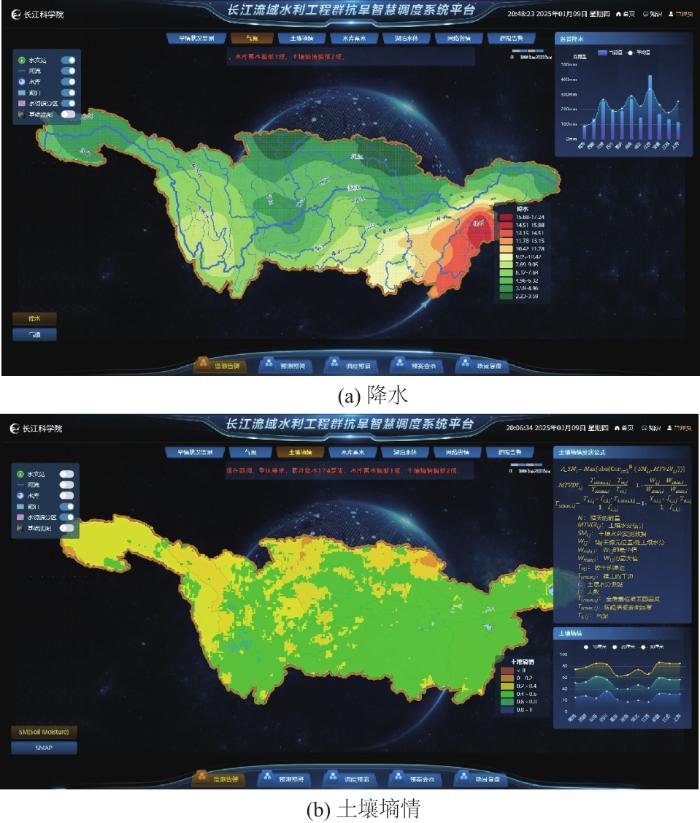
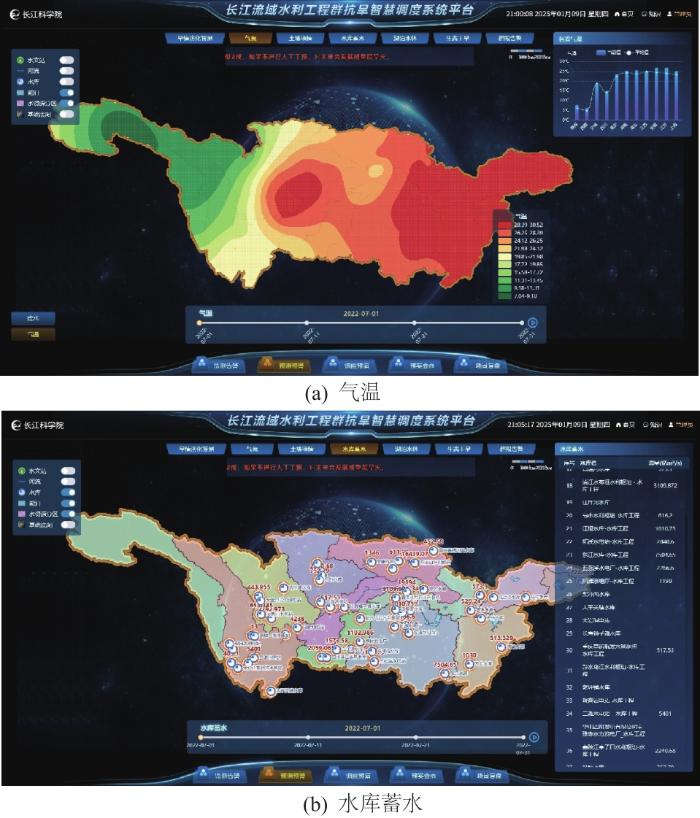
以2022年7月1日为监测时间节点。平台接入数据底板中的降水、气温、土壤墒情、水库蓄水等监测数据,采用折线图、热力图、栅格图、表格等方式展示流域当前旱情分布情况。
如图4所示,2022年汛期以来,长江流域进入高温天气,大部分地区降水偏少,四川、重庆等地农田出现缺墒状态,大中型水库蓄水量普遍低于多年同期1成左右,提示长江流域有可能发生旱灾。
2.1.2 监测数据超限告警
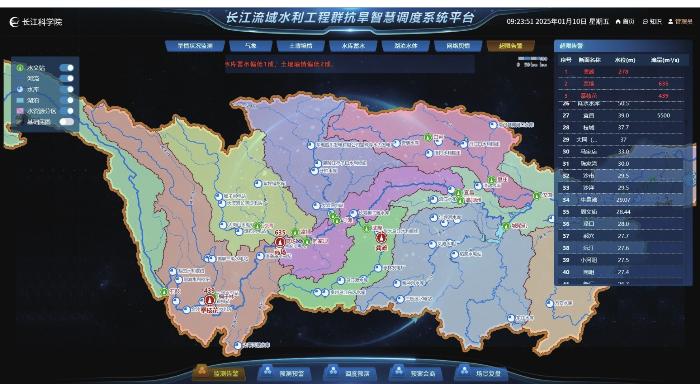
如图5所示,金沙江攀枝花、岷江高场、乌江龚滩3个控制断面监测水位接近旱警水位,要重点关注四川中部、重庆东部局地旱情。
2.1.3 干旱网络舆情监测分析
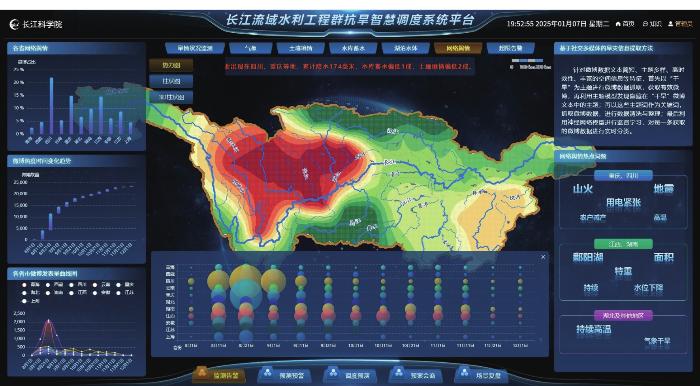
微博、Twitter、抖音等带有发布时间、发布位置标签的社交媒体数据,成为了灾害应对数据的重要来源。平台选择微博作为社交媒体数据源,基于机器学习与人工智能算法,通过文本抓取、主题特征发现、神经网络分类、情感倾向分析等步骤处理干旱演化过程中的灾情微博数据,展示长江流域社会公众对于旱情关注热点时空分布及主题特征[21]。
如图6所示,长江流域2022年7月份干旱微博数据量较小,在8月中下旬达到顶峰,到年底基本结束;四川、重庆干旱主题热词是“山火、地震”,江西则是“鄱阳湖面积、水位下降”,这3个省市微博数据量超过了全流域的一半;公众对干旱事件情感倾向随旱情发展、旱灾缓解经历了从负面到正面的变化过程。
2.2 未来趋势研判
通过干旱预报预警模块实现,包括旱情预测数据接入、预测模型计算和预测数据超限告警。
2.2.1 旱情预测数据接入
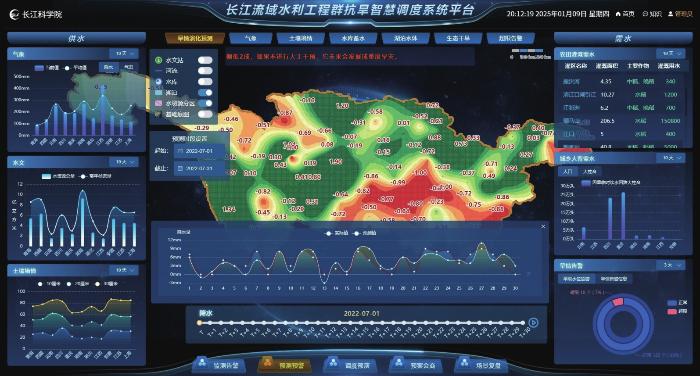
平台接入数据底板中的降水、气温、土壤墒情、水库蓄水等模型预测数据,采用折线图、热力图、栅格图等方式展示流域未来旱情分布强度情况。
如图7所示,以2022年7月1日为时间节点,预测未来30 d长江流域延续高温天气,大部分地区降水持续亏缺,土壤墒情偏低1成,大中型水库蓄水量偏低2成,提示长江流域极有可能进入中度干旱灾害态势。
2.2.2 预测模型计算
平台研发了LSTM(Long Short-Term Memory)预报模型,实现了未来3、7、15 d等降水、气温预报。如图8所示,LSTM模型预报精度较高,可供旱情预测分析。
2.2.3 预测数据超限告警
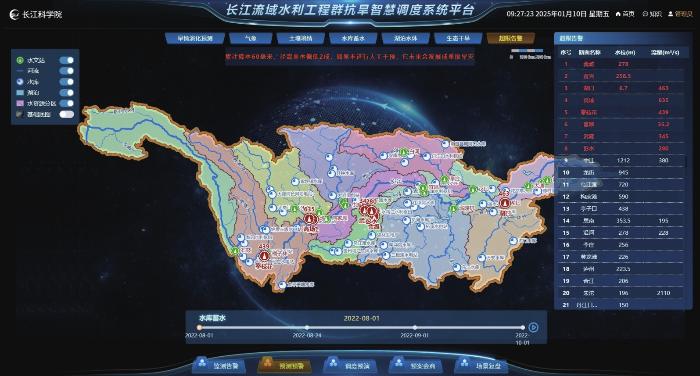
2.3 抗旱调度预演
通过抗旱调度预演模块实现,包括抗旱调度方案知识库构建、基于知识库和场景推理的抗早调度方案。鉴于三峡水库是长江中下游抗旱补水骨干水源,抗旱调度对象重点考虑向家坝-三峡水库。
2.3.1 抗旱调度方案知识库构建
按照“单元-网络-图谱”构建抗旱调度方案知识库,见图10(a)。首先,通过实体节点语义识别、节点属性抽取、实体节点属性链接,构成抗旱调度基本知识单元。其次,通过水库、控制断面点之间的抗旱调度响应关系以及水库抗旱任务联系,将基本知识单元有机组织成抗旱知识网络。最后,通过抗旱场景模拟生成、调度方案知识抽取、抗旱知识库构建与动态修正等,将抗旱知识网络链接成抗旱调度方案知识库。
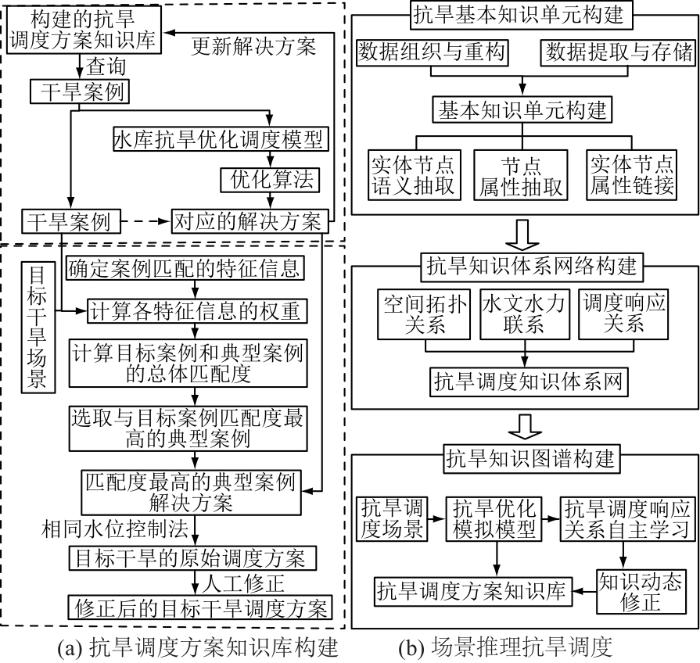
根据历次三峡水库调度方案,建立了“上游来水-入库-出库”映射关系,形成了三峡水库抗旱调度方案知识库,实现了三峡抗旱调度经验知识组织重构。
2.3.2 基于知识库和场景推理的抗早调度方案
按照“特征信息抽取-场景特征匹配-人工干预修正”形成抗旱调度方案,见图10(b)。首先,根据流域调度特征确定用于场景匹配的特征信息,构建“上游入库流量-水库起调水位-水库期末水位-下游重要断面”特征信息查找表,计算特征信息权重。其次,基于场景匹配技术开展目标案例与典型案例匹配度计算,优选与目标案例匹配度最高的典型案例。最后,对于计算中出现的下游水位过低等情况进行人工干预,形成抗旱优化调度方案。
平台已实现基于知识库和场景推理的抗旱调度方案生成,提供了正算、反算功能,基本达到了抗旱调度多种工况要求。
以2022年7月1日为时间节点,预测未来30 d持续干旱的场景,生成三峡水库抗旱调度方案。
2.3.2.1 正算功能
根据向家坝来水和下游干旱需水情况,在“上游入库流量-水库起调水位-水库期末水位-下游重要断面”特征信息查找表中顺序搜索,正向计算调度期三峡入库出库以及下游重要断面的水位流量,自动生成多种水量调度方案,并且以旱警水位为约束条件,开展三峡水库抗旱调度方案比对分析和综合展示,形成正算推荐方案(图11)。
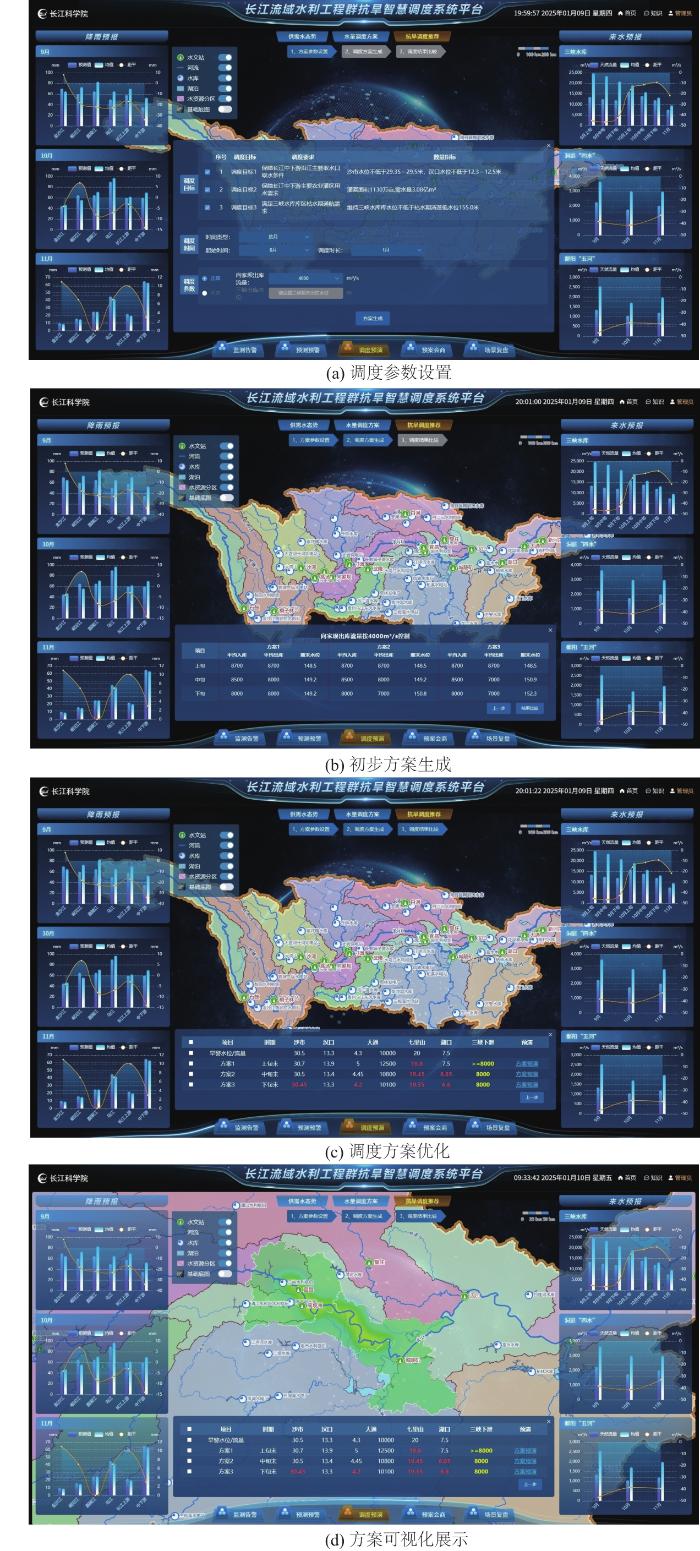
第1步:调度参数设置。抗旱调度目标为保障长江中下游主要取水口取水、农业灌区用水及枯水期通航要求。设置向家坝出库流量(上游来水)为4 000 m3/s。调度周期设置为7 d。
第2步:初步方案生成。基于知识库和场景推理算法,计算调度期间三峡入库、出库流量,以及沙市、汉口、湖口、大通等下游控制断面水位,生成多种调度方案。
第3步:调度方案优化。以沙市、汉口、湖口、大通等控制断面旱警水位为约束条件,在水量允许的条件下,删除控制断面水位接近旱警水位方案,保留满足供水需求的调度方案。
第4步:方案可视化展示。对于保留方案进行调度过程可视化展示,供多方案比选。
2.3.2.2 反算功能
为了保障三峡水库调度期末达到特定水位,在“上游入库流量-水库起调水位-水库期末水位-下游重要断面”特征信息查找表中逆序搜索,反向推算调度期向家坝来水、三峡入库出库以及下游重要断面水位流量,自动生成多种水量调度方案,并且以旱警水位为约束条件,开展了三峡水库抗旱调度方案比对分析和综合展示,形成反算推荐方案(图12)。
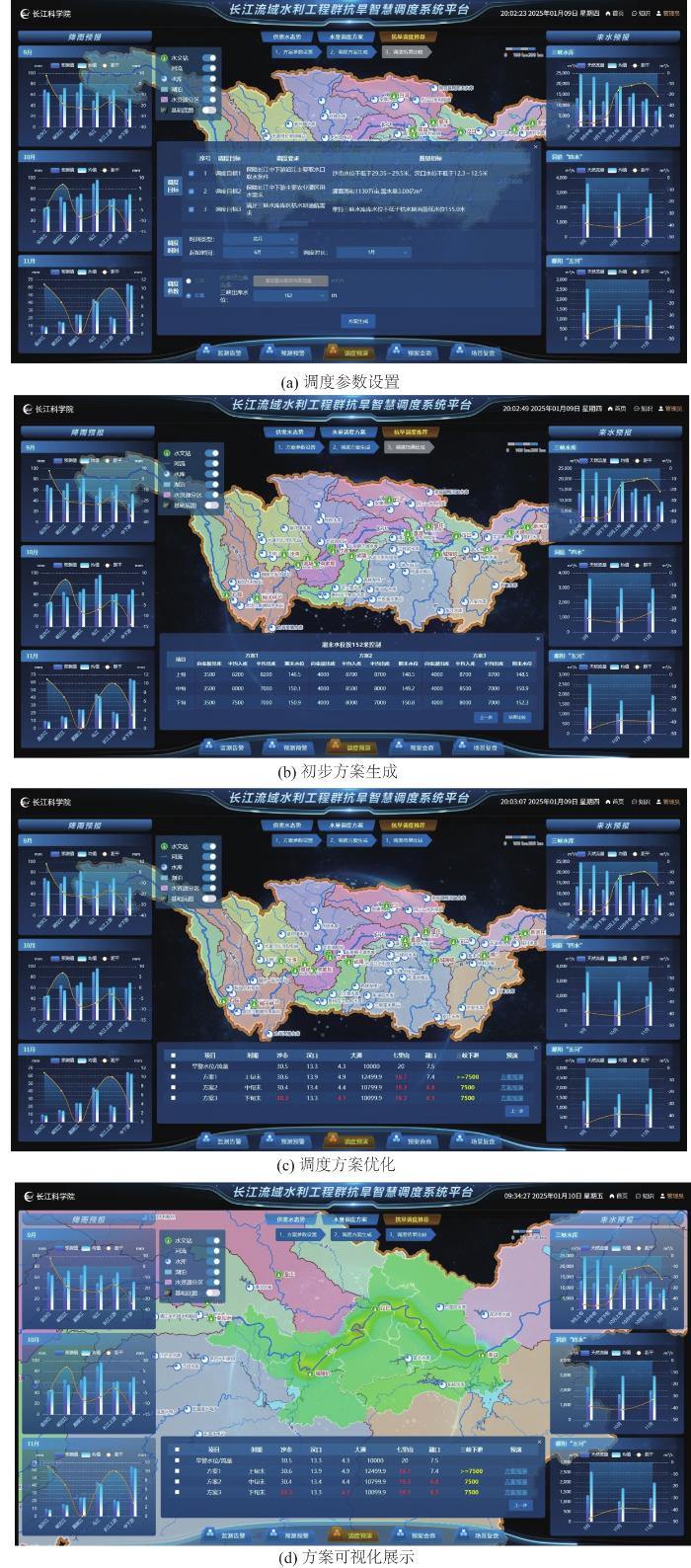
第1步:调度参数设置。抗旱调度目标为保障长江中下游主要取水口取水、农业灌区用水及枯水期通航要求。三峡水库调度期末水位设置为152 m。调度周期设置为7 d。
第2步:初步方案生成。基于知识库和场景推理算法,计算调度期间向家坝来水、三峡入库、出库流量,以及沙市、汉口、湖口、大通等下游控制断面水位,生成多种调度方案。
第3步:调度方案优化。以沙市、汉口、湖口、大通等控制断面旱警水位为约束条件,在水量允许的条件下,删除控制断面水位接近旱警水位方案,保留满足供水需求的调度方案。
第4步:方案可视化展示。对于保留方案进行调度过程可视化展示,供多方案比选。
调度模拟结果与长江流域抗旱保供水保秋粮丰收专项行动调度方案基本吻合。正算、反算功能可以联合使用,以提升调度方案科学化、精细化水平。
2.4 预案会商决策
通过抗旱会商决策模块实现,包括抗旱应急预案查询、抗旱报告自动生成、抗旱知识库智能应答。
2.4.1 抗旱应急预案查询
整理了长江干流11个省市防汛抗旱应急预案及长江水利委员会本级水旱灾害防御预案,包括组织机构、工作流程、预警信息、应急响应等模块。
2.4.2 抗旱报告自动生成
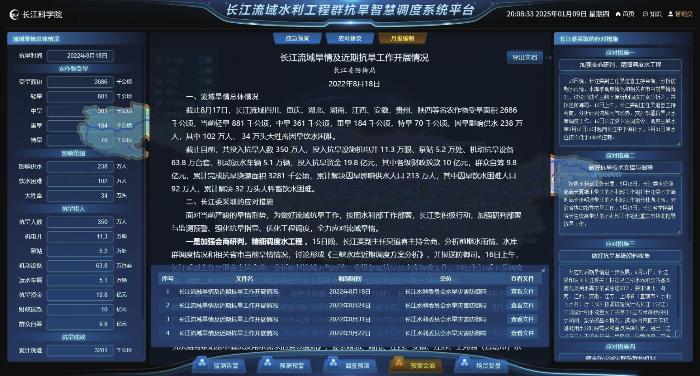
抽取了流域旱情总体情况以及应对措施,生成长江流域旱情及近期抗旱工作开展情况。如图13所示,左侧是受旱面积强度、人饮困难、抗旱投入等流域旱情总体情况,初始值由系统感知的当前旱情数据生成,可进行人为编辑修正;右侧是精细调度水工程、提供抗旱技术支撑、抗旱基础资料收集等应对措施;中间是根据修正后的流域旱情总体情况及应对措施自动生成的抗旱报告文本,可直接查看或下载编辑。
2.4.3 抗旱知识库智能应答
基于互联网信息、监测数据、历史灾情资料等多源信息,结合大模型算法,实现对用户提问的解析、理解并智能解答,辅助支持抗旱管理决策。如图14所示,用户输入抗旱相关问题,系统通过语义理解和上下文感知进行提问解析,并在抗旱知识库中抽取关键信息,形成智能解答。


2.4.4 应用成效
本平台提供的2022年长江流域气象、水文、农业、社会经济多系统干旱监测、预报数据已被长江水利委员会采纳,编制两期《关于长江流域2022年特大干旱应对建议》呈送水利部和应急管理部,支撑了长江流域抗旱调度会商决策。
3 结束语
(1)针对抗旱“四预”目标,研发了抗旱补水调度数字孪生平台,选择长江流域2022年特大干旱为典型案例,围绕“当前旱情诊断-未来趋势研判-抗旱调度推演-预案会商决策”全链条全过程开展了情景推演,形成了流域级干旱防御数字孪生的样板案例。
(2)通过数字孪生平台研发完成干旱网络舆情监测分析、旱警水位超限告警预警、抗旱调度方案知识库和场景匹配等关键技术,为推进流域干旱防御数字孪生建设提供了技术示范,可供其他流域抗旱管理信息化建设使用。
(3)下一步将聚焦于流域来水需水预测模型、网络舆情大数据分析、抗旱调度场景智能匹配与滚动优化等研究,加快推进抗旱补水调度数字孪生平台迭代优化,提升数字孪生建设示范作用,切实提高长江流域抗旱减灾管理的智能化、信息化水平。